The medical follow-up that makes you forget chronic illnesses.
Thanks to Fluid, every patient benefits from personalised, simple and non-intrusive monitoring, regardless of their chronic illness. There is always a human at the end of the line if needed.
The medical follow-up that makes you forget chronic illnesses.
Thanks to Fluid, every patient benefits from personalised, simple and non-intrusive monitoring, regardless of their chronic illness. There is always a human at the end of the line if needed.
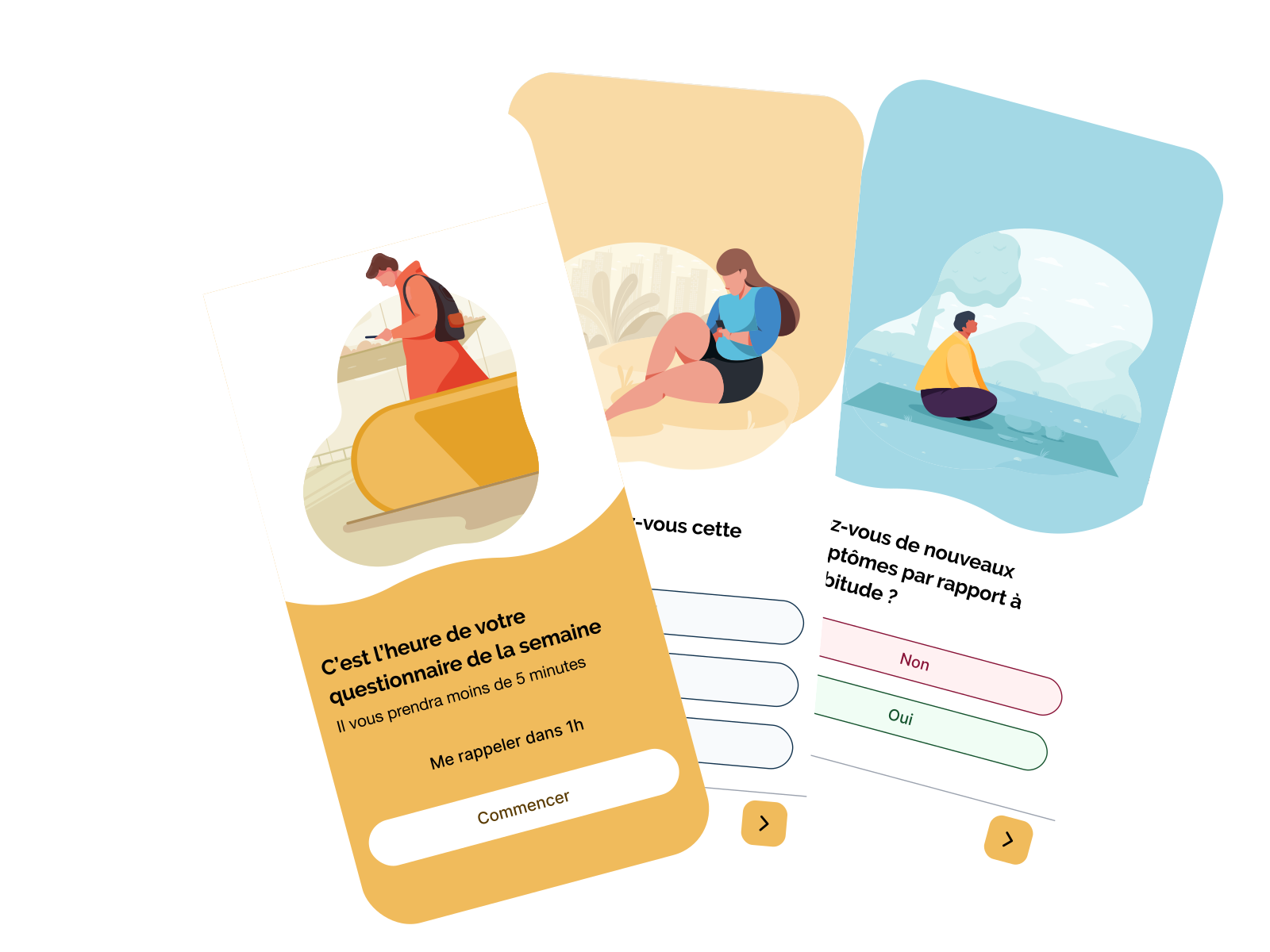
Simple form
A simplicity that captures the essentials
Fluid is a simple communication platform between caregivers and patients. It automates the collection of their feedback and condition, then relays the essentials to the teams. It provides regular, frictionless monitoring that highlights significant changes and adapts to all chronic illnesses.
Simple form
A simplicity that captures the essentials
Fluid is a simple communication platform between caregivers and patients. It automates the collection of their feedback and condition, then relays the essentials to the teams. It provides regular, frictionless monitoring that highlights significant changes and adapts to all chronic illnesses.
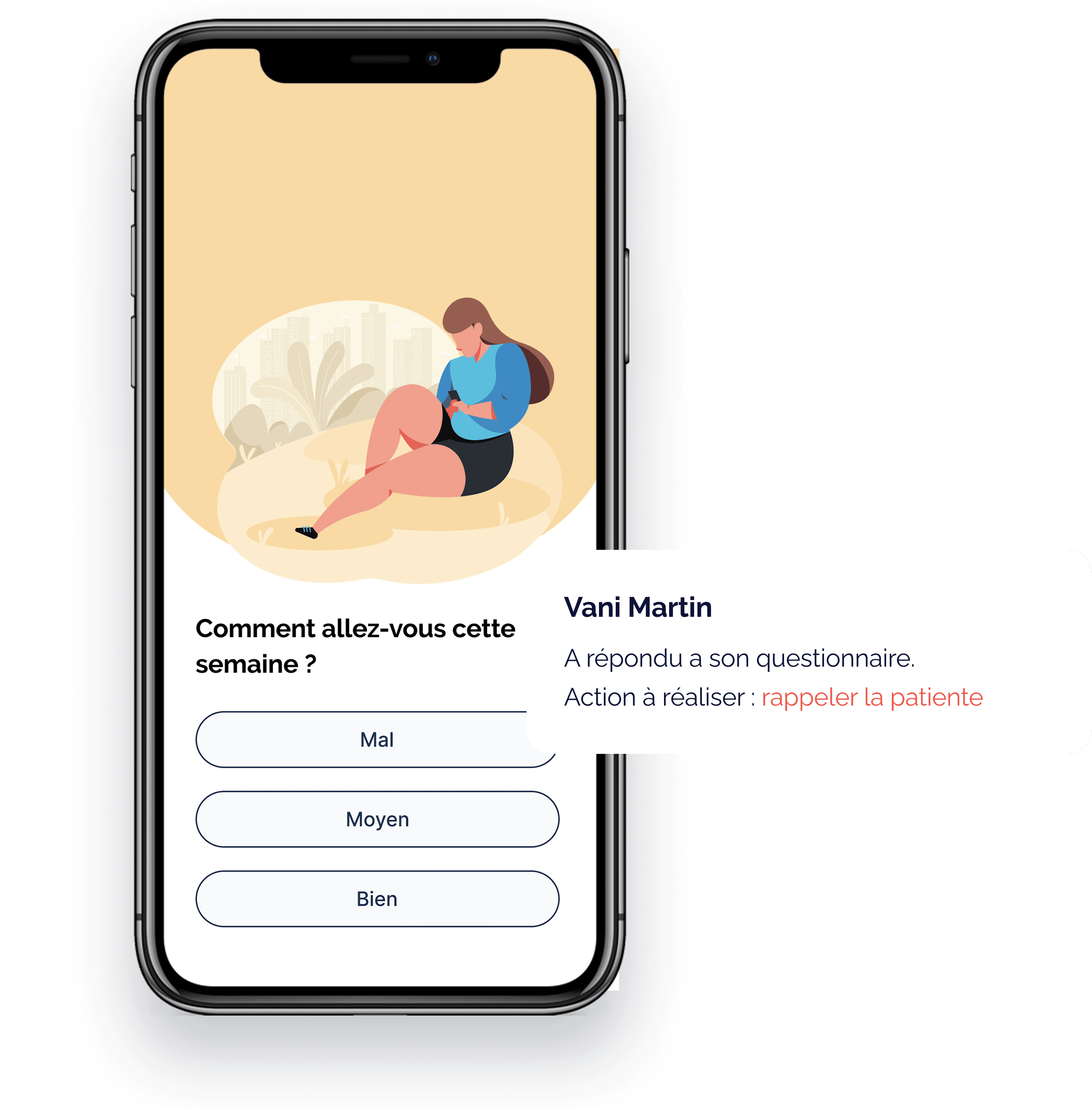
Patients respond
Sharing how they feel

Email or SMS
How are you?

Historisation
Shared information

Make the calls
Contact patients and/or caregivers when necessary

Fluid Team
Analyze & observe
Patients respond
Sharing how they feel
Email or SMS
How are you?
Historisation
Shared information
Make the calls
Contact patients and/or caregivers when necessary
Fluid Team
Analyze & observe
Team of experts
A caregiver at the
other end of the line
Our doctors and nurses follow up on the surveys, analyse the answers, detect warning signals, and get back in touch with the patient if necessary. It is a human support system that coordinates with the usual caregivers and documents each exchange.
Team of experts
A caregiver at the
other end of the line
Our doctors and nurses follow up on the surveys, analyse the answers, detect warning signals, and get back in touch with the patient if necessary. It is a human support system that coordinates with the usual caregivers and documents each exchange.
Effective action
Care at the right moment
When an alert is detected, the team acts: immediate advice, follow-up calls, and, if necessary, coordination with the doctor to organise the next steps (teleconsultation, appointments, examinations). It is an intervention at the right time, thereby preventing the situation from deteriorating.
Effective action
Care at the right moment
When an alert is detected, the team acts: immediate advice, follow-up calls, and, if necessary, coordination with the doctor to organise the next steps (teleconsultation, appointments, examinations). It is an intervention at the right time, thereby preventing the situation from deteriorating.

Medical
Ten years of research
Born from the work of the CRESS, the Fluid approach extends ten years of observations and studies on the follow-up of patients with chronic illness. In this continuity, we are conducting a large-scale independent clinical study (2,000 patients) with CRESS, AP-HP, Inserm and Université Paris Cité.
We want to provide robust evidence, better understand the real needs of patients and improve the system, as close as possible to the reality of chronic illness sufferers.
The stakes of this study are to highlight, in particular, the early detection of signals, the coordination of care and the impact on the quality of life of millions of people living with chronic diseases.
Born from the work of the CRESS, the Fluid approach extends ten years of observations and studies on the follow-up of patients with chronic illness. In this continuity, we are conducting a large-scale independent clinical study (2,000 patients) with CRESS, AP-HP, Inserm and Université Paris Cité.
We want to provide robust evidence, better understand the real needs of patients and improve the system, as close as possible to the reality of chronic illness sufferers.
The stakes of this study are to highlight, in particular, the early detection of signals, the coordination of care and the impact on the quality of life of millions of people living with chronic diseases.
Born from the work of the CRESS, the Fluid approach extends ten years of observations and studies on the follow-up of patients with chronic illness. In this continuity, we are conducting a large-scale independent clinical study (2,000 patients) with CRESS, AP-HP, Inserm and Université Paris Cité.
We want to provide robust evidence, better understand the real needs of patients and improve the system, as close as possible to the reality of chronic illness sufferers.
The stakes of this study are to highlight, in particular, the early detection of signals, the coordination of care and the impact on the quality of life of millions of people living with chronic diseases.



FAQ
Frequently Asked Questions
How to access Fluid monitgoring?
For the time being, Fluid is being deployed in pilot programmes with partner organisations. There is no public registration. Contact us to stay informed about upcoming openings.
How to access Fluid monitgoring?
For the time being, Fluid is being deployed in pilot programmes with partner organisations. There is no public registration. Contact us to stay informed about upcoming openings.
How is my data managed?
Your data is only used for your monitoring and communication with your caregivers. It is hosted in France by a certified HDS provider, encrypted, and accessible only to authorised teams (your caregivers and our support). It is never sold or shared. You can exercise your GDPR rights (access, rectification, deletion) at any time.
How is my data managed?
Your data is only used for your monitoring and communication with your caregivers. It is hosted in France by a certified HDS provider, encrypted, and accessible only to authorised teams (your caregivers and our support). It is never sold or shared. You can exercise your GDPR rights (access, rectification, deletion) at any time.
How does the form work?
You receive a text message or an email each week. Reply with simplicity: if everything is fine, one question is enough; if not, please elaborate on what you think is useful. Our medical team analyses your responses and will contact you again if necessary.
How does the form work?
You receive a text message or an email each week. Reply with simplicity: if everything is fine, one question is enough; if not, please elaborate on what you think is useful. Our medical team analyses your responses and will contact you again if necessary.
Is it possible to participate in the clinical study?
Inclusion is led by our hospital and academic partners according to specific criteria to ensure a representative cohort. Please contact us specifying your situation (patient, doctor, institution) to be directed accordingly.
Is it possible to participate in the clinical study?
Inclusion is led by our hospital and academic partners according to specific criteria to ensure a representative cohort. Please contact us specifying your situation (patient, doctor, institution) to be directed accordingly.
What to do in case of an emergency or concerning symptoms?
Fluid is not an emergency service. In case of severe signs, call 15 (or 112) immediately. Outside of an emergency, report your issue via the survey: our team will get back to you as part of the programme.
What to do in case of an emergency or concerning symptoms?
Fluid is not an emergency service. In case of severe signs, call 15 (or 112) immediately. Outside of an emergency, report your issue via the survey: our team will get back to you as part of the programme.
Contact our team
Request a demo
To better understand Fluid: surveyx, dashboard, alerts, and integration into the care pathway. A member of the team will answer your questions.